TL;DR
On June 4, 2026, Google launched Search profiles: a dedicated, followable page for publishers and creators, with a large header image, a "Follow" button and a feed of latest content. Reachable from Discover, the Knowledge Panel and a direct URL. For brands, it's a surface you own, at the exact moment AI Overviews are melting referral traffic. As long as you understand what the profile does, and what it doesn't.
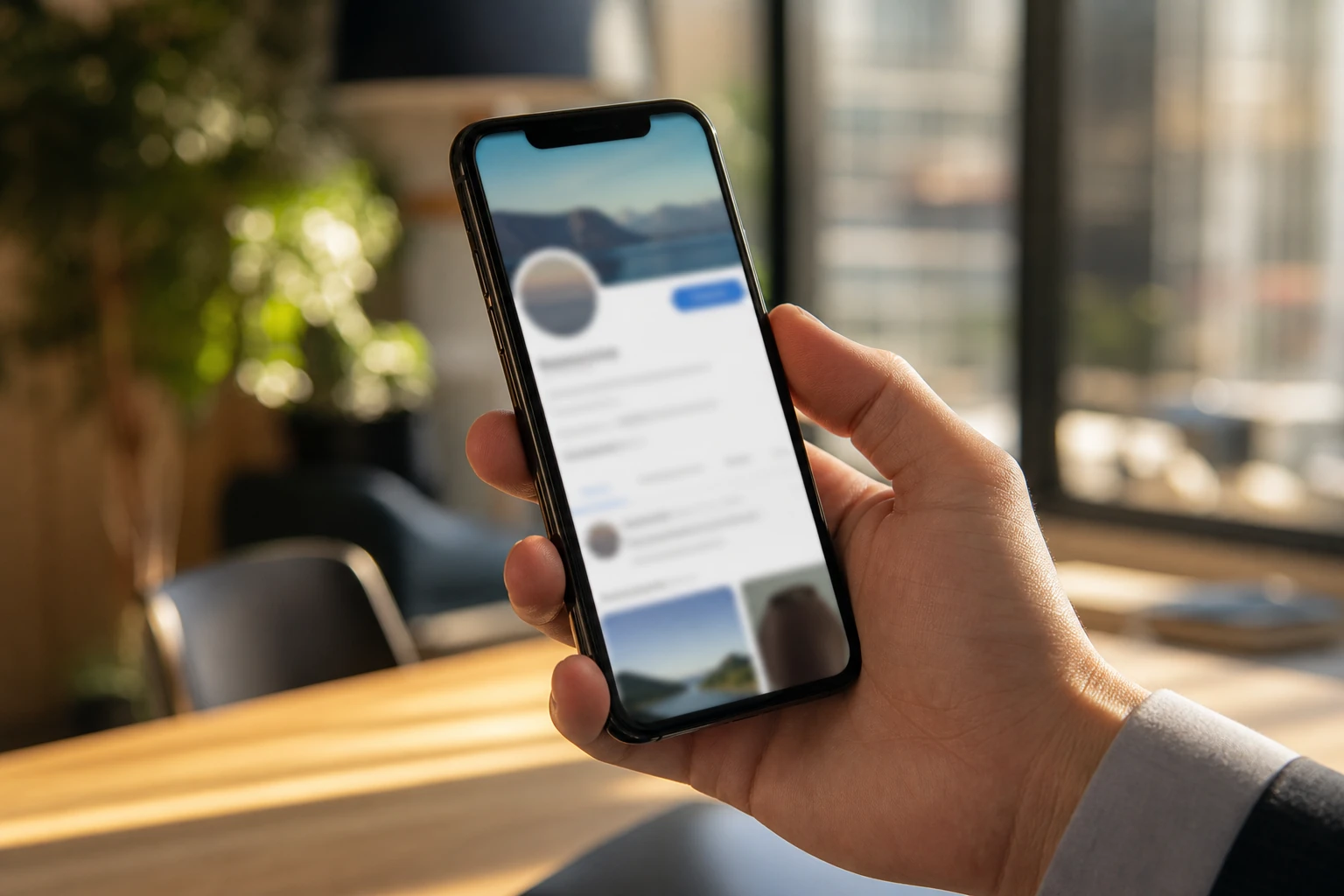
On June 4, 2026, Google officially launched Search profiles for publishers and creators, in an announcement by Ibrahim Badr, Product Manager for Search, published on Google's official blog. The profile is a page searchers can view, follow and return to: a large visual header, a button to subscribe, and a showcase of latest articles, videos and social posts, all in one place.
In practice, Google is opening a space you control inside its own results. The page can be reached three ways: by tapping a publisher's name in Discover, via a button on their mobile Knowledge Panel, or through a shareable direct URL. The rollout starts in the US, for accounts "with a sizable following on at least one major social or video platform," and will expand to other regions.
What Google actually launched
This isn't May's quiet test. On May 12, Google had handed 54 US publishers control of their Discover profile, an experiment that, in practice, did not move traffic. June 4 is the move to scale: an official name, eligibility extended to creators, and crucially new entry points. The decisive addition is the "Follow" button paired with Discover: a user who subscribes will then see your content surface in their personalized feed.
The profile is customizable with an avatar, a bio, a link to your website, your social networks and video platforms. Google frames the goal in two parts: helping audiences "easily follow sources," and letting creators "shape their presence on Search." In other words, an official identity page, validated by Google, right where your prospects already search.
The signal to keep: Google isn't adding a gadget. It's introducing a subscription logic, "followability," into the heart of Search. When an engine lets you build a direct audience, it's because it knows the one-off click is becoming rare.
Why now: the collapse of referral traffic
The timing is no accident. Since AI Overviews rolled out, organic traffic has been eroding: some analyses point to a drop of up to 42% on the most exposed portfolios, and the share of zero-click searches keeps rising, as the debate over "Google zero," now owned at the top of the company, illustrates. Google answers your question directly, the user reads, no longer clicks, and your site loses the visit.
The Search profile is a partial answer to this problem: if the user no longer arrives via the blue link, Google offers them another path, to follow you. The relationship shifts from the single click to a lasting subscription. For a brand, it's a chance to turn passing visibility into a recurring audience, without depending solely on ranking for one query.
What it changes for SMEs
The rollout starts in the US, but Google's track record shows expansion follows quickly. Three consequences to anticipate, without waiting for the launch in your market.
1. Your brand entity becomes a measurable asset. A followable profile rewards those Google clearly identifies as a source: consistent name, recognized authority, real social presence. This is exactly the entity work that also feeds AI citations. The same rigor serves Search, Discover and generative engines.
2. Discover becomes a channel you can cultivate. Until now, Discover was a black box you endured. With subscriptions, you can build a base of followers who will see your content again. Regular, engaging editorial content gains new strategic value.
3. The profile doesn't replace the citation. Remember May's test: owning a page wasn't enough to bring back traffic. The profile captures those who already know you. To be discovered by those who don't, in AI Overviews as in ChatGPT, you still need to be cited as a reference source. The two mechanics are complementary, not interchangeable.
What to do now
- Check your eligibility and prepare the ground. The profile first targets accounts with a sizable social or video following. Consolidate your social profiles and link them clearly to your site.
- Strengthen your entity. Organization structured data, a solid "About" page, consistent author signals: this is what helps Google recognize you as a legitimate source, the condition for a useful profile.
- Publish a steady editorial stream. A "Follow" button is only worth something if you publish. A consistent cadence feeds Discover and gives people a reason to subscribe.
- Don't bet everything on the profile. Treat it as a retention surface, not an acquisition one. Acquisition still lives in organic citation and ranking.
This shift toward subscription is part of a broader move: Google itself reminds us that optimizing for AI is doing SEO, as its official guide for generative search spells out. The foundation doesn't change, it just spreads to new surfaces.
Our take
The Search profile is the polite admission of a new era: Google knows the click is getting scarce, so it offers you a way to build a direct audience on its turf. That's good news for brands investing in a real presence, a false promise for those waiting on a shortcut. At Cicéro, we keep saying it: the page they give you doesn't replace the reputation you earn. Our job is to build the second, GEO audit, editorial production and automated semantic internal linking, with agency-quality work and software-grade productivity.
Sources
- → Google (official blog): "A new profile to help publishers and creators highlight their work on Search," Ibrahim Badr (June 4, 2026)
- → Search Engine Land: Google introduces Search profiles within Google Discover (June 4, 2026)
- → Variety: Search profiles launched as AI summaries cause referral drop-off
Frequently asked questions
Are Search profiles available outside the US yet?
No. The rollout starts in the US, for publishers and creators with a sizable following on at least one major social or video platform. Google says it plans to expand the feature to more regions "in the coming months," with no precise timeline for other markets.
How is this different from the Discover profiles tested in May?
May's test gave 54 US publishers control of their Discover profile, with no measurable effect on traffic. The June 4 launch widens access, makes the "Search profiles" name official, adds the "Follow" button and three entry points (Discover, Knowledge Panel, direct URL). It's a move from test to product.
Does a Search profile improve my ranking or AI citations?
The profile is not a ranking factor and doesn't guarantee being cited by AI Overviews or ChatGPT. It serves to retain an audience that already knows you. Discovery by new users still depends on the quality, structure and authority of your content.
How do I claim my profile when it's available?
According to Google, eligible accounts will be able to claim their profile and customize it (avatar, bio, website, social networks, video platforms). While you wait for access, the best preparation is to consolidate your brand entity: a clean Knowledge Panel, Organization structured data and a consistent social presence.
What this article doesn't cover
We don't analyze here the quantified impact of Search profiles on traffic, for lack of hindsight (May's test suggests a limited effect, but the launched product is different). We also don't cover the exact eligibility criteria beyond Google's wording ("sizable following"), nor the timeline for arrival in Europe, which remain to be confirmed. We'll update this piece as the data becomes available.

Growth and SEO content strategist, I founded Cicéro to help businesses build lasting organic visibility, on Google and in AI-generated answers alike. Every piece of content we produce is designed to convert, not just to exist.
LinkedIn