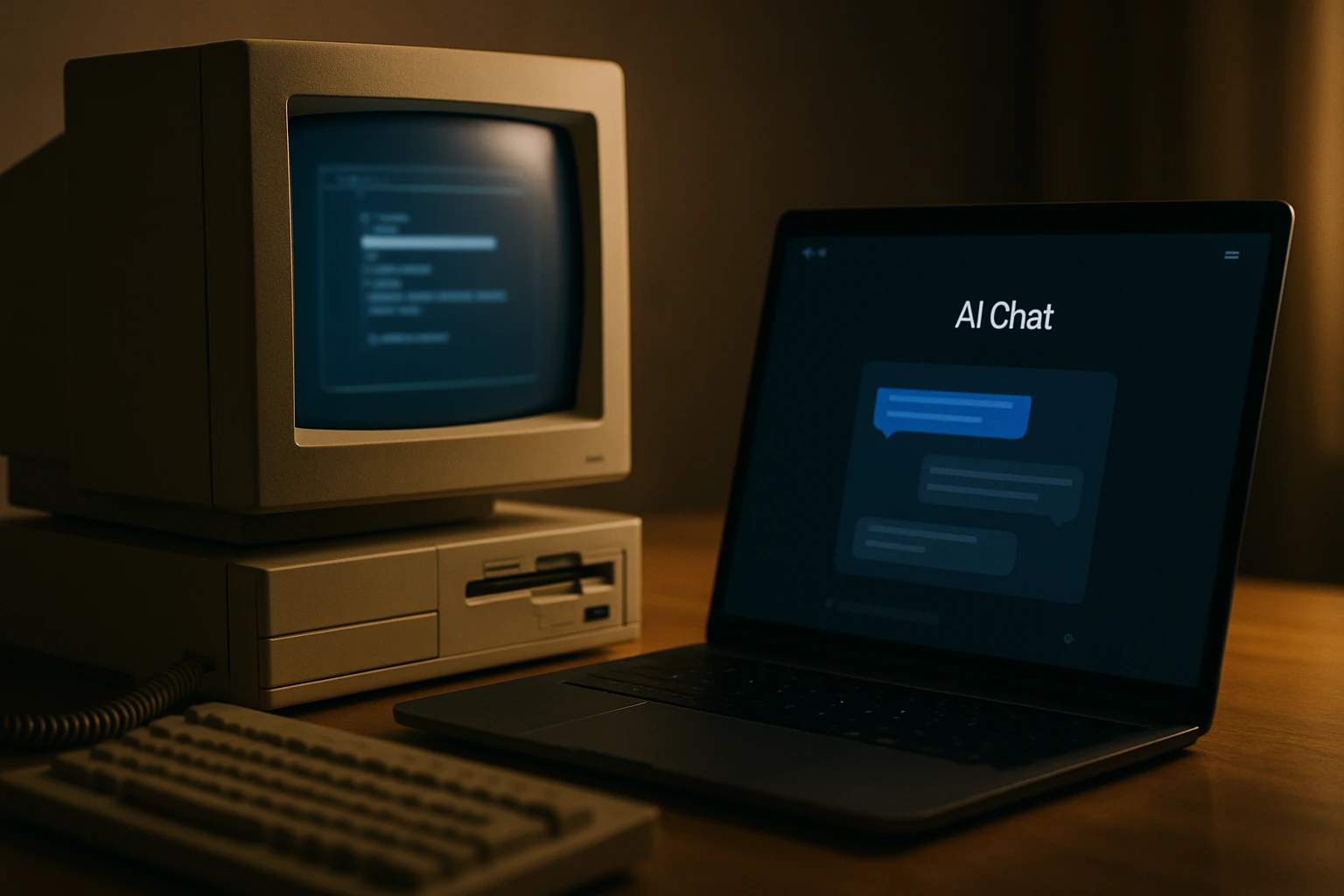
TL;DR: IAC officially shut down Ask.com on May 1, 2026 after 25 years. The pioneer of natural-language question search closes its doors. Right as ChatGPT, Perplexity and Google AI Mode finally deliver on its original promise. For your SEO: structure content to answer questions directly, not just match keywords.
On May 1, 2026, IAC officially shut down Ask.com, formerly Ask Jeeves, after 25 years of operation. The message displayed on the site was unambiguous: "As IAC continues to sharpen its focus, we have made the decision to discontinue our search business, which includes Ask.com. After 25 years of answering the world's questions, Ask.com officially closed on May 1, 2026." The closure was reported by TechCrunch on May 2 and confirmed by Search Engine Land on May 3, 2026.
The closure had been coming for years. In 2010, IAC chairman Barry Diller publicly acknowledged that Ask.com had « no competitive viability against Google. » What's remarkable, though, is the timing: Ask.com shuts down precisely when the idea that created it, natural-language question-based search, has finally taken over the entire industry.
Is your content structured to be cited by AI?
Ask Jeeves Was Right, 30 Years Too Early
Founded in 1996 in Berkeley, California by Garrett Gruener and David Warthen, Ask Jeeves rested on a simple premise: people ask questions, not keywords. Instead of typing « Paris weather », a user could write « What's the weather like in Paris today? » and expect a direct answer.
The approach was technically ahead of its time. Natural Language Processing in the 1990s-2000s could not genuinely parse complex questions. Google won by optimizing for keywords. And the entire Web adapted, producing keyword-stuffed content engineered to match ranking algorithms.
Thirty years later, ChatGPT, Perplexity and Google AI Mode do exactly what Ask Jeeves promised: understand a natural-language question and answer it directly. According to Google AI Mode data from April 2026, the engine now processes over one billion queries per month. The vast majority formulated as complete questions. Perplexity reports 45 million monthly active users and 1 billion monthly queries as of March 2026. Google's own Liz Reid outlined how longer, conversational queries are now Google Search's fastest-growing segment.
What Ask.com's Death Means for Your SEO
The signal is clear: keyword search is giving way to question search. Not in five years. Now. Content optimized to match isolated keywords is progressively less visible than content structured to answer specific questions directly.
In practice, two types of content are surviving, and growing, in this environment:
- Content that answers a question directly within the first 200 words, without preamble or filler
- Content with strong authority signals (named sources, verifiable data, identified author) that AI systems prefer to cite
Conversely, generic « 10 tips for... » articles without clear Q&A structure are losing visibility in AI-generated answers. Even if they continue to rank on classic Google for now. Understanding how AI engines evaluate your content's credibility is the key to staying visible; our analysis of E-E-A-T signals in the AI era breaks down exactly what the algorithms look for.
3 Actions to Take Right Now
1. Restructure key pages in Q&A format. Each H2 becomes a question; the body text answers it immediately. This format is directly indexable by the retrieval-augmented generation (RAG) systems that power ChatGPT Search, Perplexity and Google AI Mode.
2. Add FAQ schema (FAQPage schema.org) to your main pages. This structured markup explicitly signals to AI engines that your page contains question-answer pairs. Significantly increasing your chances of appearing in AI-generated excerpts. Proper FAQ schema implementation is one of the highest-ROI technical SEO moves you can make right now.
3. Name your sources and date your content. The Ask.com story illustrates that a good concept, poorly executed, disappears. AI systems preferentially cite content with verifiable sources, an identified author, and a recent publication date. Without these credibility signals, your content remains invisible in generated answers.
The Cicéro Take
Ask.com didn't fail because the idea was wrong. It failed because the technology of its era couldn't keep the promise. Today, that promise is kept, by others. The question for businesses isn't whether AI search will keep growing. It already has. The question is: does your content answer your customers' questions the way Ask Jeeves dreamed of doing in 1996?
Sources
- → TechCrunch, May 2, 2026, Farewell, Jeeves: Ask.com shuts down
- → Search Engine Land, May 3, 2026, Ask.com shuts down after over 25 years
- → Ahrefs, February 2026, AI Overviews CTR data (-58% for top-10 pages)

Growth and SEO content strategist, I founded Cicéro to help businesses build lasting organic visibility. On Google and in AI-generated answers alike. Every piece of content we produce is designed to convert, not just to exist.
LinkedIn