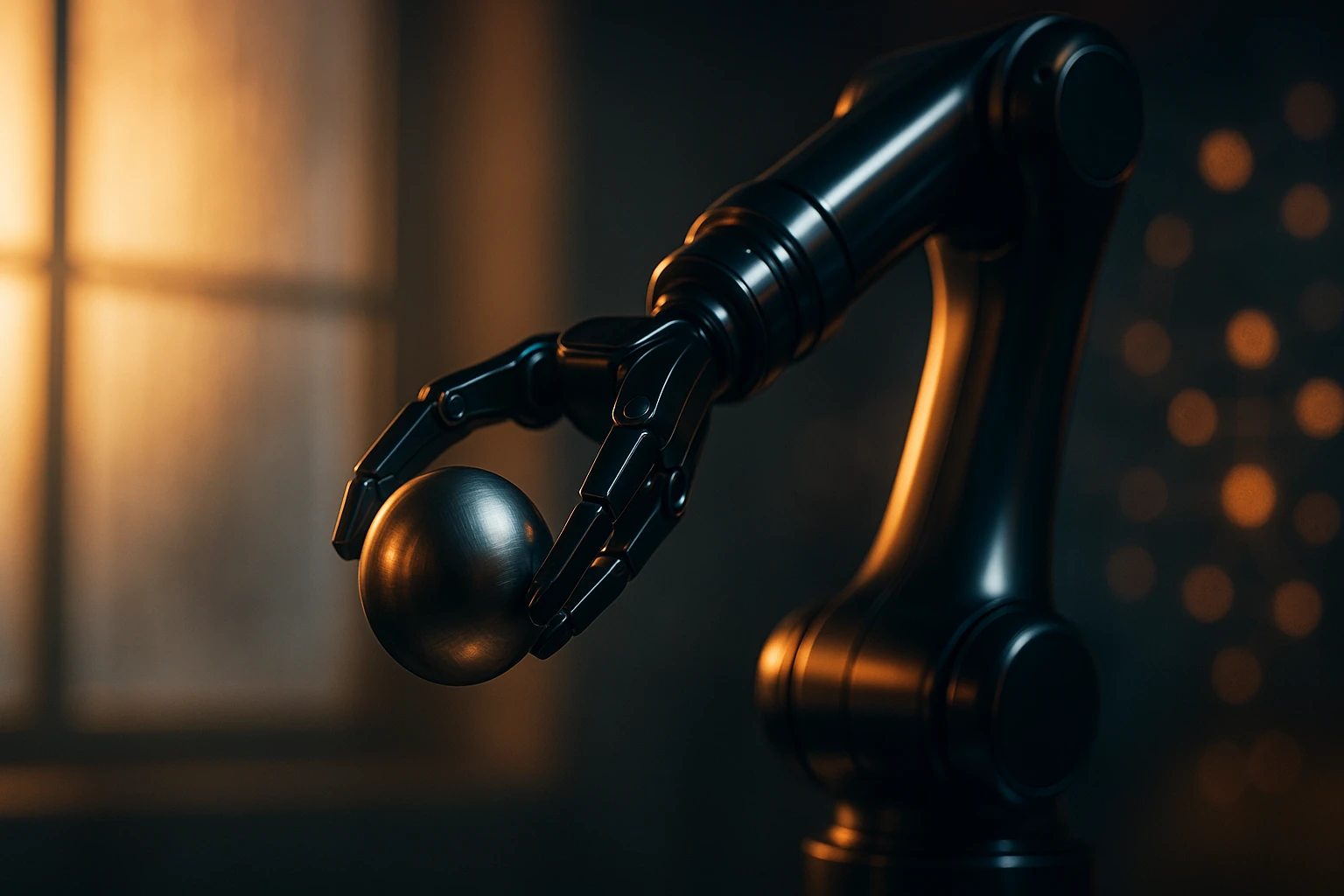
Anthropic announced on May 18, 2026 the acquisition of Stainless, the leader in SDKs and MCP (Model Context Protocol) tooling. Terms undisclosed, reported above $300M by The Information. Hosted Stainless products used by OpenAI, Google and Cloudflare will be wound down. The SEO/GEO read: AI agent infrastructure is consolidating around 3-4 players. Your content must now be both citable by LLMs and connectable by agents. Welcome to the MCP era of SEO.
On May 18, 2026, Anthropic announced it has acquired Stainless, a US startup specialised in SDK generation and MCP (Model Context Protocol) tooling, according to an official statement on the Anthropic blog. The amount : reported above $300 million by TechCrunch citing The Information : was not disclosed by either party.
For SEO leads and marketing directors at small and mid-sized businesses, this acquisition matters more than it looks. It marks the accelerated consolidation of AI agent infrastructure : and redefines what a website must produce to stay visible.
What Stainless did : and why Anthropic wanted it
Founded in 2022 by Alex Rattray, a former Stripe engineer, and backed by Sequoia Capital and Andreessen Horowitz, Stainless had built the tooling that automates SDK generation for the APIs of OpenAI, Google, Cloudflare, Replicate, Runway : and Anthropic itself. The official Python, TypeScript, Kotlin, Go and Java libraries that developers plug in to call these APIs were produced and kept in sync automatically by Stainless every time the OpenAPI spec evolved.
In its announcement, Anthropic is explicit on the strategic read: "The frontier of AI is shifting from models that answer to agents that act : and agents are only as capable as the systems they can reach." Katelyn Lesse, Head of Platform Engineering at Anthropic, adds: "Agents are only as useful as what they can connect to."
Translation: for a Claude agent to book a meeting, trigger a quote or fetch a product catalogue, you need SDKs and MCP servers. By internalising Stainless, Anthropic takes control of the pipe that connects its models to the rest of the digital world. InfoWorld notes that OpenAI, Google and Cloudflare will lose access to the hosted generator, while keeping full ownership of the SDKs already produced.
What is MCP : and why it matters for you
The Model Context Protocol (MCP) is an open standard introduced by Anthropic in late 2024 to let LLMs plug cleanly into external data sources: a CRM, a product catalogue, a knowledge base, a booking calendar. An MCP server is, concretely, a connector that exposes part of your stack to a model like Claude, ChatGPT or Gemini.
Until now, your visibility strategy mostly relied on two signals: crawlable HTML for Googlebot, and schema.org markup to help engines understand your pages. That's exactly what we cover in our method to appear in ChatGPT and Google AI Overviews.
With the rollout of agents (Claude, Gemini Intelligence on Android, ChatGPT Operators) your site will need to speak a second language. The language of connectors. Without an MCP server or API endpoint exposing your most useful data, you'll stay invisible when an agent tries to act on a user's behalf ("Claude, find me a printer in Lyon who can deliver by tomorrow").
Three concrete consequences for SMBs
1. Provider consolidation is accelerating. With $14 billion invested in Anthropic by Google and Amazon in 2025, plus the recent round valuing Anthropic at $900 billion, the AI agent market is structuring around 3-4 players (Anthropic, OpenAI, Google, Microsoft). Optimising for one engine is no longer enough.
2. Schema.org becomes an agent resource, not just SEO. When an agent has to cite your business or act on your behalf, it scans your structured data first. Product pages, FAQ, hours, pricing : anything not marked up is invisible. That's the finding from the May 2026 Ahrefs study : pages with schema markup are cited 2.3× more often by LLMs.
3. Tracking AI citations moves from optional to essential. Without measuring how often Claude, ChatGPT or Gemini cite your content, you're flying blind. Microsoft Clarity now ships AI citation tracking by default. No excuse to stay in the dark on this channel.
The mistake to avoid. Thinking MCP is a developer topic. It's first and foremost an editorial strategy: which business data to expose, in which shape, for which agent use case. Without that upstream thinking, an MCP server is useless.
What to do in the next 30 days
- Audit your current schema.org : homepage, service pages, blog posts. Organization, Product, FAQPage and LocalBusiness types are the most cited by agents.
- Identify your 3 most useful business data points for an agent: pricing, availability, catalogue, pricing FAQ. They'll move the needle on transactional queries.
- Produce citable content : Q/A formats, dated lists, comparisons. LLMs cite structured, factual content, not narrative blocks.
- Measure AI citations : Clarity, Search Console, Citation Tracker. No baseline, no arbitrage.
What this article doesn't cover
The technical implementation of an MCP server (Node, Python or TypeScript) is out of scope for this news piece. Same for data governance questions (GDPR, professional confidentiality) that arise the moment you expose an endpoint to a third-party agent. Worth its own article : and always handled by a joint product + security + legal team.
The Cicéro take
Anthropic buying Stainless for $300 million isn't a small headline. It's the signal that AI agent infrastructure is consolidating around 3-4 players, and that classic SEO (producing indexable text) is now only half of the game. The other half is producing content and data connectable by agents.
That's exactly what we do at Cicéro: GEO audit + editorial production + automated semantic interlinking. Agency-quality work, software-grade productivity : with continuous monitoring of your visibility in AI answers.
Sources
- → Anthropic : "Anthropic acquires Stainless" : official announcement, May 18, 2026
- → TechCrunch : deal details, Alex Rattray quotes, valuation via The Information
- → InfoWorld : impact on existing OpenAI, Google, Cloudflare SDKs
Growth and SEO content strategist, I founded Cicéro to help businesses build lasting organic visibility : on Google and in AI-generated answers alike. Every piece of content we produce is designed to convert, not just to exist.
LinkedIn