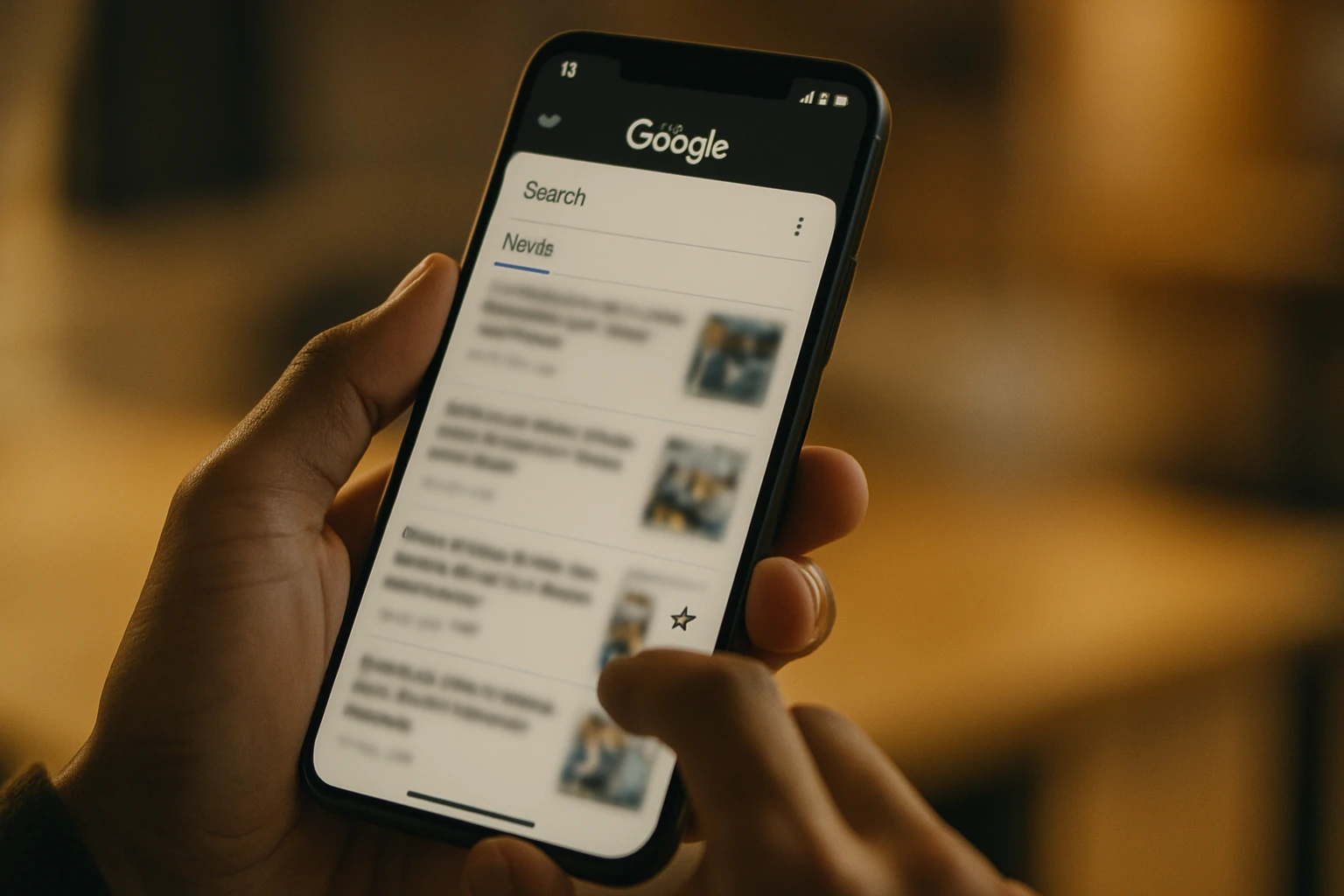
TL;DR: On April 30, 2026, Google expanded its Preferred Sources feature to all languages supported by Google Search. Your readers can now bookmark your site with a single tap. And Google will prioritize your content for them in Top Stories and Discover. Sites marked as preferred sources see 2× higher click-through rates. Here are the 3 actions to take today.
On April 30, 2026, Google officially expanded Preferred Sources to every language supported by Google Search, according to an announcement published on the Google Blog. The feature, previously available only in English since its December 2025 global launch. Now supports French, Spanish, German, Portuguese, and 12 more languages, opening a direct audience-building lever for publishers worldwide.
In practice: any Google user can now star your site directly from search results. A star icon appears next to your articles in Top Stories. Once clicked, Google will show your content first whenever that reader searches for news relevant to your topics.
What the data shows
According to data published by Google, readers who mark a site as a preferred source are twice as likely to click through to its articles in search results. This isn't a black-box algorithmic signal. It's a direct, measurable CTR improvement driven by real audience intent.
The expansion connects directly to the February 2026 Discover Core Update, in which Google explicitly stated: "We'll continue to show content that's personalized based on people's creator and source preferences." Preferred Sources is not a marginal feature. It's a core pillar of Google's personalization strategy for 2026 and beyond.
3 actions to take right now
To verify your site is eligible and start capturing this signal, here's what to do immediately.
Verify your domain eligibility
Only domain-level sites are eligible (e.g., yoursite.com). Subfolders like yoursite.com/blog do not qualify. Test your domain at google.com/preferences/source?q=yoursite.com, if it appears in the search box, you're eligible.
Add a « Add us as a Preferred Source » CTA
Google has published official badge assets in 16 languages, freely downloadable from Google Search Central. Place them in your header, sidebar, or end of articles. The link format: https://google.com/preferences/source?q=YOUR_DOMAIN.
Promote it via newsletter and social
The deeplink works everywhere. In your next newsletter, ask subscribers to click the link and add your site. Even a 5% conversion rate on your existing list translates to immediate signal gains in Google Search. With no technical SEO work required.
What this means for your editorial strategy
Preferred Sources doesn't replace traditional SEO, it amplifies it. If your content is already visible in Top Stories during periods of high ranking volatility, every reader who marks you as a preferred source becomes a captive subscriber who will see your next article first.
Unlike Google Discover's opaque personalization algorithm (which increasingly connects to Workspace and enterprise AI tools), this signal is entirely actionable. You don't have to wait for an algorithm to decide you're relevant. You build an audience whose preference Google is contractually obligated to honor.
For publishers producing regular content, industry news, analysis, case studies. This is one of the rare SEO levers where editorial investment compounds over time rather than depreciating.
Our take
At Cicero, Preferred Sources is the clearest example yet of Google's 2026 shift: replacing technical signals with real audience signals. Your Domain Authority, PageRank, and backlink profile still matter. But a reader who taps a star next to your article is a signal Google cannot fabricate or buy. It's the one it will increasingly prioritize.
The 200,000+ sites already marked are overwhelmingly English-language. Non-English markets are starting from zero. The next three months are the window where early movers capture competitive advantage. Before every publisher has added the button to their site.
Sources
- → Google Blog, Official announcement of expansion to all languages (April 30, 2026)
- → Google Search Central, Publisher guide and official CTA badge assets
- → Search Engine Journal, Analysis of impact as a global SEO signal

Growth and SEO content strategist, I founded Cicéro to help businesses build lasting organic visibility. On Google and in AI-generated answers alike. Every piece of content we produce is designed to convert, not just to exist.
LinkedIn