In one sentence
Google just delivered, for the first time, an explicit formula for winning on AI Search: stop producing surface-level content, go two levels deeper. Commodity content that summarises what already exists no longer earns anything.
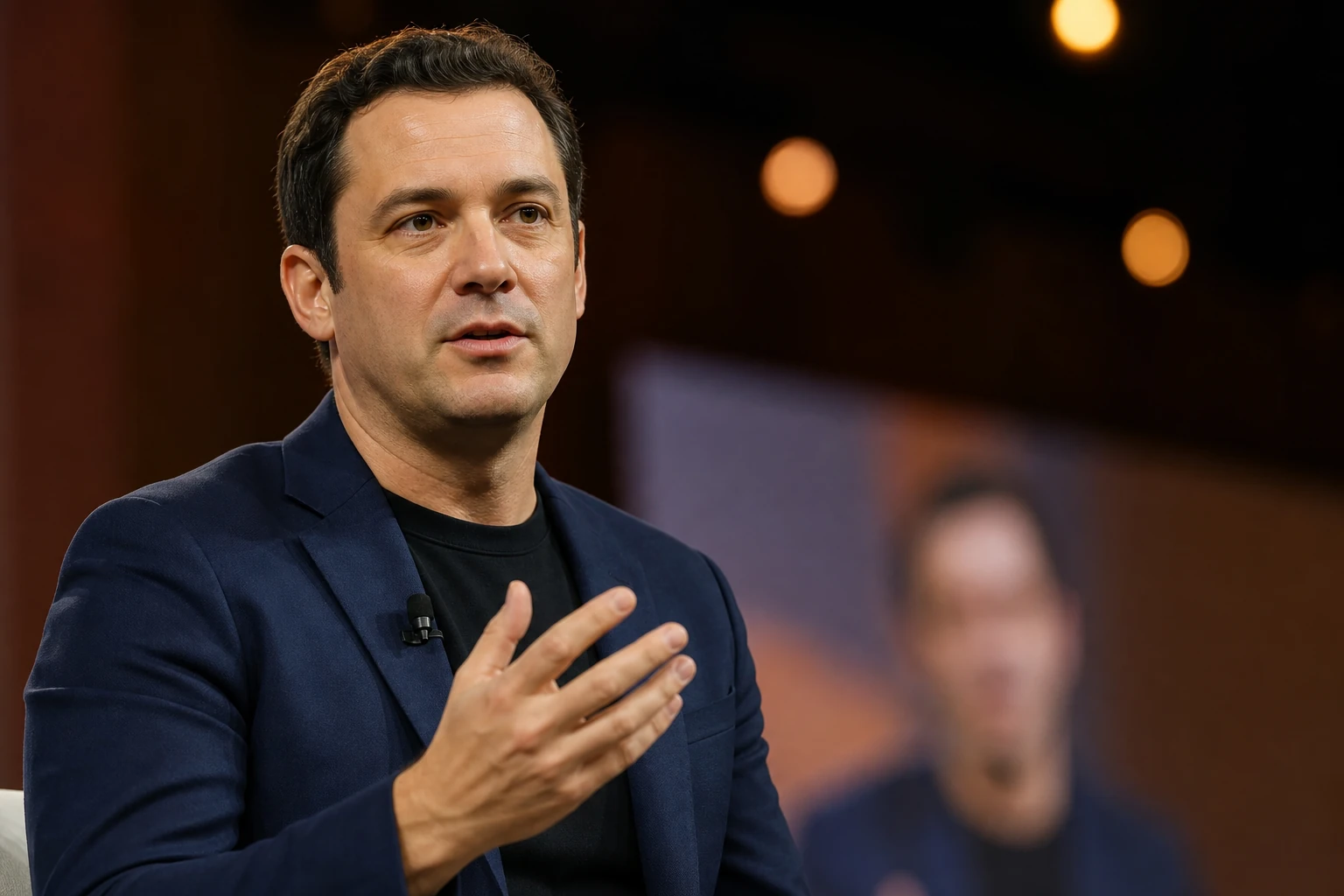
On May 26, 2026, at Google Marketing Live 2026, Nick Fox (SVP of Knowledge & Information at Google, the head of Search) gave the clearest formula a Google executive has ever offered for optimising against AI. Interviewed by Ben Smith (editor-in-chief of Semafor) and reported by Search Engine Land, Fox said: "The way to optimize for AI search is the same way to optimize for search. Create great content. Go beyond the surface level."
The statement landed three days after the May 2026 core update finished rolling out, and a week after Google I/O announced AI Mode had crossed one billion monthly users. The timing is not accidental: Google is now publicly stating the rules of the game.
What Nick Fox actually said
"If you assume that the AI will provide sort of a first-level response, high-level framing, the best content that will do the best within AI is one that goes one level deeper, two levels deeper, and is really helpful there."
: Nick Fox, SVP of Knowledge & Information, Google. Google Marketing Live 2026, May 26, 2026.Fox then added a point on the human dimension of search:
"As humans we want to hear from humans. We want to hear human perspectives. We want to hear human experiences."
: Nick Fox, GML 2026Finally, on the shape of queries themselves: "The questions that people are asking now are these two-, three-, four-sentence queries." Short keywords are disappearing in favour of long prompts rich in context and constraints.
Pichai confirms : same day, different interview
On the same May 26, 2026, Sundar Pichai sat down with Nilay Patel for an interview at The Verge. Two sentences are worth quoting:
- "I look at agents, and that is the next evolution of the web. I think it will evolve the web pretty profoundly."
- "As the technology improves, low-quality clicks get filtered out."
That second sentence is explosive for publishers: Pichai is admitting, in so many words, that Google is increasingly filtering the traffic it sends. The "easy" clicks on generic content are being switched off at source by AI Overviews : that's a deliberate policy, not a side effect.
Why this statement changes the game
Three things make this message unprecedented:
- First quotable official guidance : "One level deeper, two levels deeper" is an actionable formula. Until now, Google's line had been "create helpful content" (the 2022 Helpful Content System), which offered no execution guidance.
- It matches the Ahrefs data : A March 2026 Ahrefs study (4 million AI Overview URLs analysed) showed that only 38% of AI Overview citations come from the top 10 organic results. The other 62% come from deeper pages answering sub-queries (query fan-out) that the top 10 don't address. Fox has just confirmed the internal mechanism.
- It validates the human voice : "Hear from humans" is a direct response to the flood of mass-produced AI content. Our analysis of the Graphite study (52% of the web written by AI) already showed saturation. Google sees it too and is calibrating AI Overviews accordingly.
The shift in angle : Before: "optimise for the right keywords." Now: "answer the sub-questions the AI can't answer alone." Commodity content that summarises what already exists captures nothing. Deep, sourced, dated, lived content captures everything left.
The concrete action plan for this week
Four actions taken directly from Fox's statements:
- Audit the "depth level" of your 20 best pages. For each page: does the query have 2-3 obvious sub-questions (who, why, how, at what price, compared to what, in what context)? If the page doesn't answer them, it's a prime AI Overview cannibalisation target.
- Map the fan-out queries for your niche. Type your main query in AI Mode and read the sub-questions the AI explores internally (often visible in the side panel). Each sub-question becomes an H2 or paragraph to add.
- Inject lived experience. At least one number you measured yourself. At least one named, concrete case. At least one counter-intuitive recommendation from your practice. That's what Fox calls "hear from humans."
- Measure two surfaces independently. Organic SERP and AI Overview citations no longer track together (only ~38% overlap). Tracking your Google rank is no longer enough : track AI citations via a dedicated tool (Ahrefs Brand Radar, Profound, or a monthly manual audit).
What this statement does not say
Three important limits:
- Fox gives no operational metric. "Two levels deeper" is not a Lighthouse score : it's a qualitative bar you have to translate into process.
- The message mainly applies to informational queries. For transactional intent (Shopping, comparison engines, direct purchase), Google has already pushed its own formats (AI Overviews Shopping, Information Agents), and content depth matters less than product-data quality.
- Fox says nothing about publishers already cannibalised by AI Overviews. For sites down 30-50% in 2025, "create great content" is correct but doesn't solve the short-term revenue gap.
The Cicero take
This statement confirms, word for word, what we've been telling clients since summer 2025: 2026 SEO = quality × depth, not volume × frequency. Publishing 30 generic articles per month has become actuarially unprofitable. Publishing 4 articles at 10/10 (sourced, dated, with primary data and a practitioner angle) beats the competitor publishing 30.
That is exactly the Cicero Studio methodology: GEO audit + editorial production + automated semantic interlinking, with a ≥90/100 quality threshold blocking the push. Agency-quality work, software-grade productivity : €250 to €1,800 per month.
Primary sources
- → Search Engine Land : Coverage of the Nick Fox × Ben Smith interview at Google Marketing Live 2026 (May 26, 2026)
- → Search Engine Land : Sundar Pichai at The Verge: "Search, agents and tools will become one product" (May 26, 2026)
- → Ahrefs Blog : AI Overview citations study: only 38% come from the top 10 organic (March 2026)
Growth and SEO content strategist, I founded Cicéro to help businesses build lasting organic visibility : on Google and in AI-generated answers alike. Every piece of content we produce is designed to convert, not just to exist.
LinkedIn