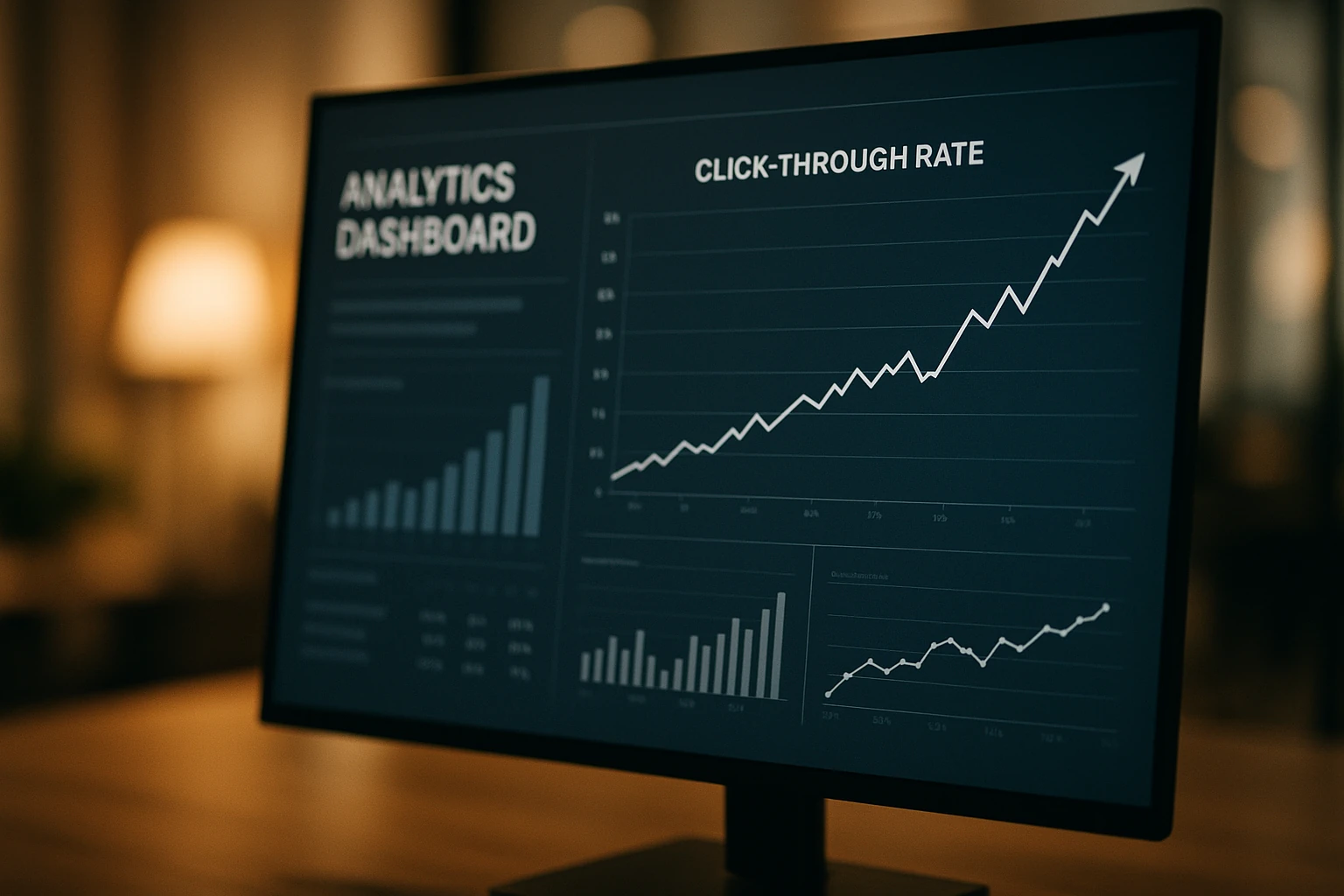
TL;DR: On April 24, 2026, Seer Interactive published an analysis of 5.47 million queries showing Google AI Overviews CTR climbed from 1.3% (December 2025) to 2.4% (February 2026). A +85% rebound in two months. The gap between cited sites (2.1% CTR) and non-cited sites (0.9% CTR) has widened sharply. The takeaway: get cited in the AI Overview or lose the click.
On April 24, 2026, Seer Interactive published its 2026 update on how Google AI Overviews affect organic click-through rates. The study, covered by Search Engine Land, analyzes 53 brands, 5.47 million queries, and 2.43 billion impressions from January 2025 through February 2026. One of the largest datasets ever published on this topic.
The finding: after a steep year-long decline, CTR on AI Overview-present queries is recovering. Sharply. But the rebound doesn't benefit everyone equally, far from it.
The numbers that change everything
The overall CTR on AI Overview queries rose from a floor of 1.3% in December 2025 to 2.4% in February 2026. That's not back to pre-AIO levels, but the trend reversed for the first time since launch.
The most important signal for your strategy: being cited in an AI Overview generates 2.3x more clicks than appearing below one that doesn't cite you. This is no longer a bonus. It's the dividing line between traffic and invisibility.
Why is CTR recovering? The technical explanation
Google has significantly refined how AI Overviews display. Early versions occupied too much screen real estate and « over-answered ». Users had no reason to click through. Since late 2025, AI Overviews have become shorter, more targeted, and more consistently attribute specific sources rather than synthesizing without credit.
The result: sites that are cited get more qualified exposure, users see their name in the AI response, click with confidence, and convert at a higher rate. According to Seer Interactive, traffic from AIO citations converts at 14.2% compared to 2.8% for traditional organic clicks.
This is exactly the challenge we address at Cicero through AEO (Agent Engine Optimization) strategy: producing structured content designed to be chosen as a source by AI answer engines, not just ranked.
Which query types are most exposed?
The study reveals a radical disparity by search intent:
- Comparison queries, 95% trigger an AI Overview
- Question queries, 86% of queries
- Informational queries, 36% of queries
- Transactional queries, 5% of queries
If your content targets comparison or question-format queries, it faces an AI Overview in 9 out of 10 cases. Getting cited isn't a nice-to-have. It's the condition for surviving the traffic environment. As queries grow longer and more conversational, direct answers at the top of your content become even more critical for citability.
Conversely, transactional queries remain largely insulated. If you're selling products online, channel and ad format changes have more immediate impact than AIO on your traffic.
What you should do now
The AIO CTR rebound doesn't mean the problem is solved. It means the rules have changed, and sites that adapt will widen the gap. Three concrete actions:
1. Audit your AIO presence on your key queries
Manually search your 10–15 most important queries. For each one, note: does an AI Overview appear? If yes, is your site cited as a source? If not, which competitor is?
2. Restructure your content for AI citability
AI Overviews preferentially cite pages that answer a specific question directly at the top of the article, with sourced data and clear structure (lists, definitions, numbers). Classic SEO rhetoric, broad intro, long build-up, is poorly suited. Lead with the answer, support with detail.
3. Target queries without AI Overviews for your high-value commercial pages
With a 3.3% CTR on non-AIO queries versus 2.4% on AIO queries, commercial pages should target transactional or highly specific queries that Google doesn't yet synthesize. This strategic arbitrage is often overlooked.
The Cicero take
This rebound is real, but it masks a harder reality: traffic is concentrating on a shrinking number of cited sites. Google no longer distributes traffic evenly across 10 blue links. It filters, and only sites recognized as reliable sources by the model capture the majority of clicks.
SEO in 2026 looks less like a ranking competition and more like a reputation competition. The question is no longer « how do I rank #1? » but « how do I make the AI choose me as a source? » These are two different disciplines. And the second one doesn't have a playbook yet. That's what Cicero works on every day.
Sources
- → Seer Interactive, AIO Impact on Google CTR: 2026 Update (53 brands, 5.47M queries, 2.43B impressions)
- → Search Engine Land, Google AI Overviews CTR shows early signs of recovery: Study (April 24, 2026)

Growth and SEO content strategist, I founded Cicéro to help businesses build lasting organic visibility. On Google and in AI-generated answers alike. Every piece of content we produce is designed to convert, not just to exist.
LinkedIn