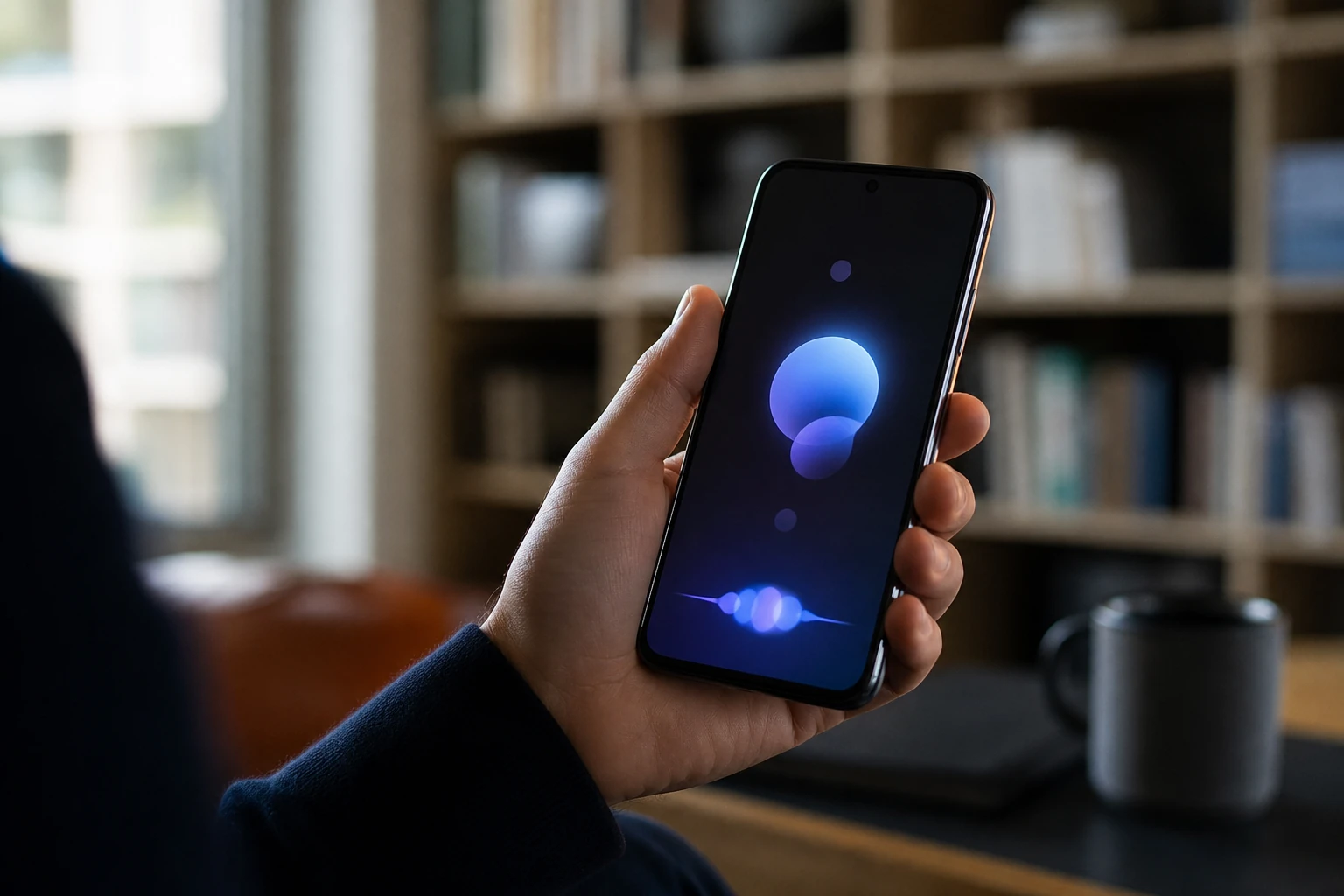
In short : On May 12, 2026, Google announced on its Chrome blog that "auto browse," an agentic browsing mode built into Gemini in Chrome, is coming to Android. The rollout starts in late June 2026, first in the United States. In practice, you delegate a task (booking, ordering, comparing) and the agent opens the sites, fills in the fields and chains the steps for you. For your visibility, the visitor is no longer only a human reading: it is also a machine crawling your site in order to act. Your funnel has to become agent-readable, not just appealing to a human eye.
On May 12, 2026, Google announced on its official Chrome blog that "auto browse," the agentic browsing of Gemini in Chrome, is coming to Android. The rollout begins in late June 2026 for users in the United States, on devices running Android 12 or later with at least 4 GB of RAM and the language set to English (US). The feature is limited to subscribers of the paid Google AI Pro and AI Ultra plans.
The idea: instead of clicking yourself, you hand a chore to the agent. Google gives concrete examples (reserving a parking spot via SpotHero, reordering pet food on Chewy) where the agent chains several steps across multiple sites on its own. As a safeguard, auto browse is designed to ask for confirmation before sensitive actions such as a purchase or a social-media post. According to Engadget, the rollout starts in the US ahead of a gradual expansion.
The numbers that matter
At launch the scope is narrow: United States, English, recent devices, paid subscription. But the direction is clear. The world's most-used browser is natively embedding an agent that can transact on third-party sites. Once that building block spreads, part of your traffic will no longer be humans scrolling, but agents executing.
Why this is a break for SEO
For twenty years we optimized pages for a human brain: a headline that hooks, an image that reassures, a button that begs for a click. With agentic browsing, a second "reader" shows up: a program that sees neither your beautiful hero nor your storytelling, but looks for usable elements, a price, an availability, a properly labeled form field, an "add to cart" button it can trigger.
This shift extends a trend we have documented for months. Zero-click search already reaches 68% of queries, and Google is rolling out its Information Agents that monitor the web continuously. Auto browse adds the last piece: after the agent that informs, the agent that acts. The question is no longer just "am I found?" but "am I actionable by a machine?".
The Cicéro take : A site built purely for the human eye (checkout paths hidden behind JavaScript, prices loaded across several clicks, forms with fuzzy labels) becomes a wall for an agent. And a blocked agent does not get frustrated: it moves on to the competitor whose page is easier to read. Machine readability becomes a conversion factor, not just a ranking one.
What it changes for your visibility
Three concrete fronts to stay in the race when an agent does the shopping for your customer.
- Expose your key data in machine-readable form. An agent that has to buy or compare looks for price, stock and availability. Properly marked-up Product and Offer structured data hands it that information without guessing. It is also what makes you citable by AI engines upstream.
- Make your flows reliable. Clear form labels, checkout steps that do not depend on opaque JavaScript, unambiguous action buttons, zero dark patterns. If the agent gets stuck in your funnel, the sale is lost before it ever reaches the confirmation a human would approve.
- Stay the source the AI recommends. Before acting, the agent often starts from a search or a recommendation. Useful, reliable, clear content : as Google reminds us in its official AI optimization guide : remains the condition for being the option the agent heads toward.
What this article does not cover
Google has not published a guide explaining how an auto-browse agent selects, reads or weighs the sites it acts on, nor an "agent compatibility" reference. The timeline outside the US and outside English is not dated, and the exact prices of the AI Pro and AI Ultra tiers vary across sources, so we do not state them here. Finally, no public data yet shows how often the agent completes a task on its own versus handing control back to the user. These points are worth watching over the coming weeks.
Our take
SEO is not disappearing; it is gaining a second audience: the machine. As long as the agent has to read your page in order to act, a clear, structured, reliable page keeps the edge : and the one that slows it down loses the sale before the confirmation. Optimizing for the human and for the agent is not two jobs: it is the same work of clarity, pushed one notch further.
Frequently asked questions
What is Gemini's auto-browse in Chrome?
When and on which devices does auto-browse arrive?
How do you prepare a website for agentic browsing?
Sources
- → Google : The Keyword (Chrome blog) : "Gemini in Chrome with auto browse comes to Android," May 12, 2026.
- → Engadget : "Gemini in Chrome arrives on Android devices in June," May 2026.
- → Chrome for Developers : "Powering the agentic web: Chrome updates at Google I/O 2026."

Growth and SEO content strategist, I founded Cicéro to help businesses build lasting organic visibility : on Google and in AI-generated answers alike. Every piece of content we produce is designed to convert, not just to exist.
LinkedIn